
How do you build and scale fashion for customers who want the latest style instantly?
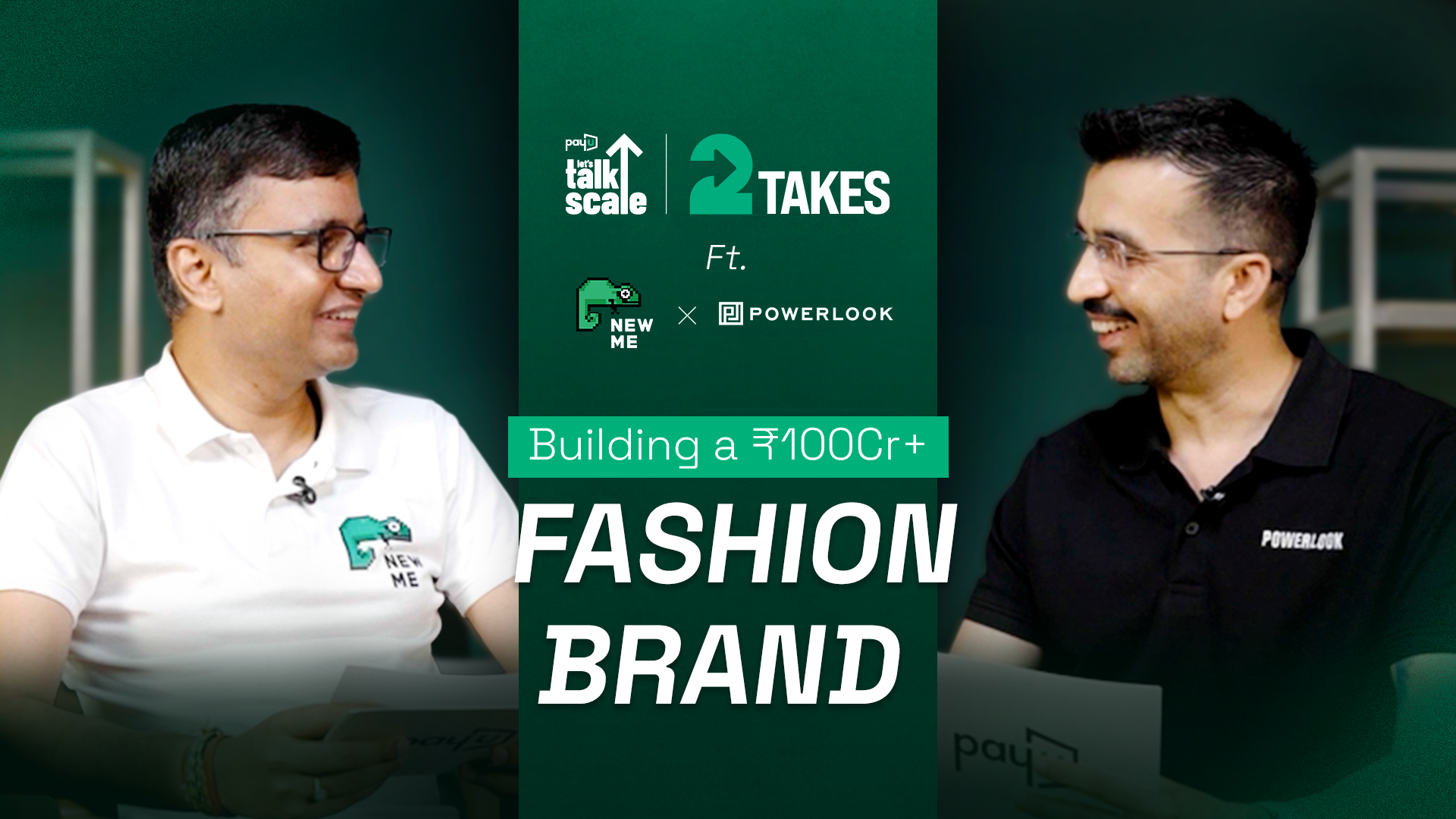
Sumit Jasoria, Co-founder & CEO of NEWME and Raghav Pawar, Co-founder of Powerlook, both saw a gap in the fashion market and built for a consumer who wanted more. More newness, faster trends and a brand they could relate to.
But how they chose to build and scale was very different. Here’s what their journeys reveal.
The Consumer They Saw
When NEWME started, Gen Z wasn’t even a word fashion companies used. The brand saw a consumer who wanted to feel like a part of the brand. They expected instant gratification. A trend on Instagram couldn’t take months to reach India.
Powerlook saw a similar shift. Consumers were no longer willing to wait for a trend to launch in Europe and reach India months later. So, Powerlook aimed to be 6–12 months ahead of local fashion, so customers saw the latest trends with them, not after them.
To get ahead of the market, they had to give consumers the latest fashion trends before anyone else. But turning that insight into a business meant solving very different problems.
The First Big Challenge
For NEWME, the challenge was to put out new styles every week. Women shop more often and don’t want to see the same product on everyone around them. So limited editions and low MOQs became the norm.
For Powerlook, the first challenge was a mindset. Many customers still believed only Western brands offered good fashion. Raghav Pawar set out to prove Indian brands could match Western fabric, design and fit, at affordable prices.
As both businesses grew, the challenges grew with them.
Fashion Is Easy to Start. Hard to Scale.
Fashion is the lowest entry barrier business. You can launch with 50 styles. The problem starts when you scale.
For NEWME, scaling to around 500 styles a week meant inventory planning, store planning and technology became critical. The business could no longer run on instinct alone.
For Powerlook, the challenge was India’s diverse fashion preferences. What works in Mumbai may not work in Bangalore, while Gujarat customers may want a mix of both. Festivals can shift demand further.
Scaling fashion is all about making the right products for the right customers, in the right markets. This also makes supply chain a critical part of the equation.
The Supply Chain Challenge
For Powerlook, the biggest issue was speed. Zara can bring a new style to store in around 20 days. In India, Raghav Pawar says, the same process takes 60 to 90. So Powerlook had to think six months ahead of the market.
For NEWME, the problem was volume. Hero styles grew from around 100 pieces to 500 to 1,000 pieces, making supply chain a much bigger lever for the business.
Supply chain at scale is very different from supply chain at an early stage. That’s where technology started playing a bigger role for both brands.
AI Is Changing the Way Fashion Works
AI is already being used across both businesses.
Powerlook uses AI to understand what customers click on and which designs get attention. It has also reduced photography costs from around ₹20–25 lakh to ₹3–4 lakh.
At NEWME, AI is being used across design, supply chain, demand prediction, product imagery and store heat maps, to predict demand more accurately.
AI is helping fashion brands decide what to make, how much to make and how to present it.
What They’d Do Differently
When asked what they would do differently, the founders took different paths.
Powerlook would still start with stores. Put the products in front of customers. Take their feedback. Fix what isn’t working. Then scale online.
NEWME would build a younger team and give them more say, since they sit closer to the consumer than the founders do.
Both come back to the same idea. Understand what the consumer wants before you scale it.
Why Copying Doesn’t Work
The founders had a similar message for new fashion brands.
Sumit Jasoria’s advice is to start with a unique consumer insight. If you’re only trying to copy another brand, there’s no clear reason for a customer to choose you.
Raghav Pawar’s advice is to stay ahead of what’s already in the market. Know your category. Know how to reach your customer. Give them something different.
The Infrastructure Behind Fashion Growth
A growing fashion business needs more than the right product. It needs the infrastructure to turn customer demand into completed purchases.
PayU helps businesses accept payments and drive customer conversion with:
Payment Gateway: Accept 150+ payment modes with industry-leading success rates, 99.98% uptime and seamless integration across web and app platforms.
No One Way to Scale
NEWME and Powerlook started with different ideas of what the fashion consumer wanted. One built around consumer understanding and technology. The other around trend leadership, stores and speed.
Both approaches helped them scale. Now, both are looking beyond India. NEWME wants to build a global brand from India, while Powerlook plans to expand across India and internationally, with an ambition to reach ₹700–800 crore in revenue.
There is no single formula for scale. It is about understanding your consumer, finding what works and building the business to keep up.
PayU powers platforms like NEWME and Powerlook, so founders can focus on building what’s next.