
For years, the payments industry has been focused on making transactions faster.
We’ve reduced the number of clicks at checkout. Saved cards have eliminated repetitive data entry. UPI has redefined what “instant payments” look like. Contactless payments have made queues shorter. Every major innovation has chipped away at friction.
But one part of the online payment journey has remained largely unchanged.
Authentication.
It happens in the final few seconds of checkout, yet it often determines whether a transaction is completed or abandoned.
As India’s digital economy continues to grow, those few seconds matter more than ever.
India’s payments story is entering its next chapter.
According to RBI, India processed over 221 billion digital payment transactions in FY25, a reflection of how deeply digital payments have become part of everyday life. Consumers now expect transactions to be fast, intuitive and secure, regardless of whether they’re ordering groceries, booking flights or shopping during a festive sale.
Every successful innovation over the last decade has had one thing in common—it removed friction without compromising trust.
Authentication is now following the same path.

Authentication isn’t broken. Expectations have simply evolved.
For nearly two decades, OTPs have played a crucial role in securing online card payments in India.
They’ve helped build consumer confidence and strengthened trust in digital commerce.
This isn’t a story about replacing OTPs because they stopped working.
It’s a story about adapting authentication to the way consumers already interact with technology.
Think about how often we unlock our phones every day.
We don’t think twice before using a fingerprint or Face ID to access our banking app, approve a UPI payment or unlock our device. Biometric authentication has quietly become second nature.
The natural question then becomes:
Why should authenticating an online card payment feel any different?
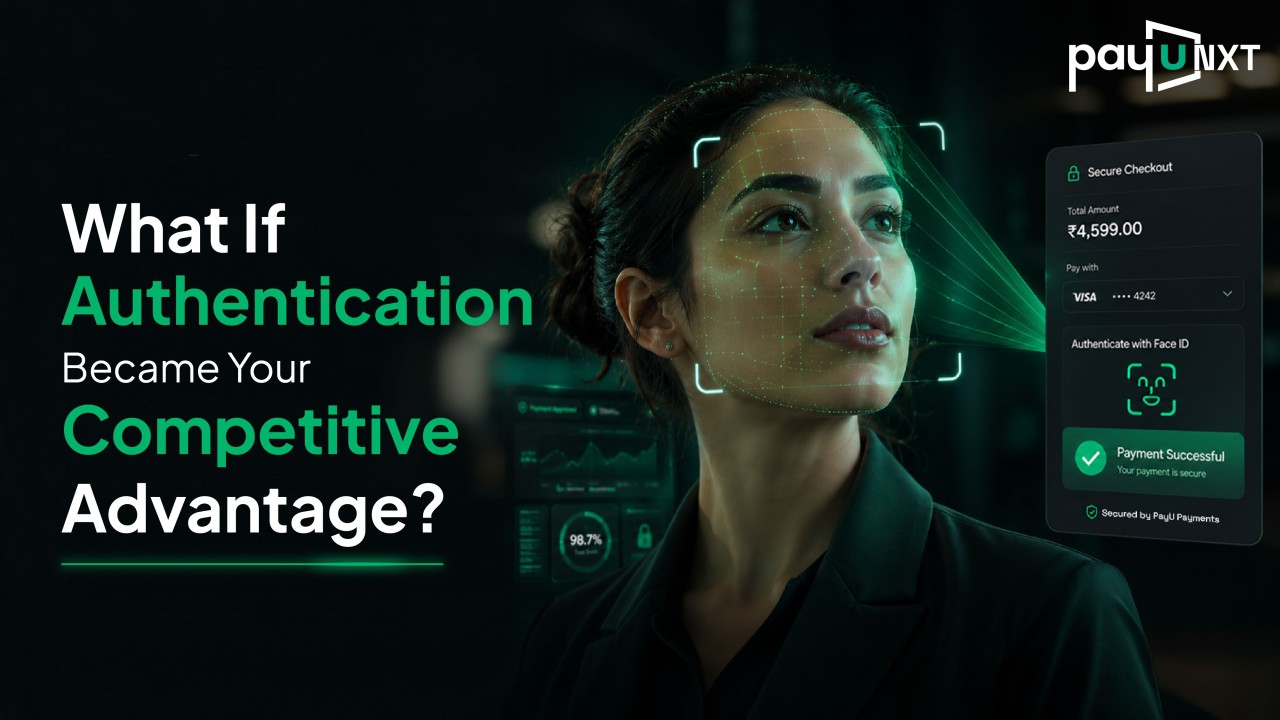
That’s where Passkeys come in.
Built on FIDO standards, Passkeys allow customers to authenticate using the biometrics they’re already familiar with, replacing the need to retrieve and enter an OTP for eligible transactions.
For customers, it’s a smoother experience.
For the ecosystem, it’s a significant shift in how trust is established.

A Passkey may look simple. The engineering behind it isn’t.
One of the biggest misconceptions about Passkeys is that they’re simply another authentication method.
In reality, they’re an ecosystem capability.
When a customer authenticates a payment with a fingerprint, it feels almost effortless.
What they don’t see is everything happening behind the scenes.
The merchant has to know whether the customer is eligible.
The payment network has to orchestrate the authentication flow.
The issuing bank has to validate the request, evaluate risk and determine whether the authentication can be trusted.
All of this happens within the existing EMV® 3DS framework, ensuring security and interoperability across participants.
The customer experiences one tap.
The ecosystem executes dozens of decisions in the background.

Building this experience takes the entire ecosystem.
One of the most interesting aspects of Passkeys is that no single participant can deliver the experience alone.
Every successful authentication is the result of merchants, payment providers, networks and issuers working together.
On the merchant side, PayU enables businesses to offer Visa Payment Passkey within their existing checkout journeys. Merchants don’t need to redesign their payment experience or replace existing EMV® 3DS infrastructure. Instead, eligible customers can authenticate using biometrics while continuing to transact through familiar payment flows.
On the issuer side, Wibmo powers the authentication layer through its Access Control Server (ACS).
That responsibility extends well beyond validating a biometric.
The platform helps issuing banks determine customer eligibility, orchestrate Passkey enrolment, validate repeat transactions, apply issuer-specific risk policies and manage the lifecycle of registered credentials—all while remaining compliant with Visa’s authentication framework.
Visa, meanwhile, provides the underlying Passkey framework and securely manages credential storage, enabling a consistent authentication experience across participating issuers and merchants.
It’s a reminder that meaningful innovation in payments rarely belongs to one company.
It happens when the ecosystem evolves together.
Why this moment matters
This broader shift recently became tangible with the rollout of Visa Payment Passkey in India, with IDFC FIRST Bank becoming the first issuing bank to go live.
It’s an important milestone. Not simply because a new authentication method has been introduced, but because it demonstrates that the ecosystem is ready to move beyond pilots and proofs of concept.
With merchants such as Myntra, MakeMyTrip, Paytm and Reliance Digital already part of the ecosystem, Passkeys are beginning to move into real customer journeys.
The timing is equally significant.
As India’s payments ecosystem continues to explore alternative authentication approaches that strengthen security while reducing friction, Passkeys represent an important step towards that future.

Why merchants should pay attention
For a long time, authentication has largely been viewed as a security checkpoint—a necessary step before completing a payment.
But as customer expectations evolve, authentication is becoming something more.
It’s becoming part of the checkout experience itself.
Think about high-intent purchase moments:
- Booking flight tickets before prices change.
- Purchasing concert tickets that sell out in minutes.
- Shopping during festive sales.
- Ordering from quick commerce platforms where speed is part of the promise.
In these moments, every additional step matters.
The smoother the authentication experience, the more likely customers are to complete their purchase without interruption.
That makes authentication more than a security conversation.
It becomes a customer experience conversation.
And increasingly, a business one.
Looking ahead
Every major shift in payments has followed a familiar pattern.
At first, it feels like a technology upgrade.
Over time, it becomes the new normal.
Very few people think about EMV chips anymore.
Few think about tokenisation.
Contactless payments have become second nature.
Authentication is now entering that same phase.
Passkeys aren’t changing how we pay.
They’re changing how we establish trust—making authentication stronger, more intuitive and better aligned with the way people already interact with technology.
For the payments ecosystem, that’s an important step forward.
For merchants, it creates an opportunity to deliver faster, more seamless checkout experiences.
And for customers, it means something even simpler.
A payment experience that just works.