
AI-Powered Summary
- Payment experiences are evolving to become more contextual, integrating seamlessly into customer journeys rather than being separate steps.
- Technologies like tokenisation, recurring mandates, and device-level authentication are enabling faster, more convenient, and less repetitive payment processes.
- Adaptive payment innovations focus on tailoring the experience to the moment, such as speeding up high-intent transactions or ensuring accessibility for diverse user needs.
- Redesigning existing payment methods, like net banking, around customer behavior is as important as creating new technologies.
- The future of payments lies in making better contextual decisions about how and when payment capabilities should appear, enhancing simplicity and relevance for users.
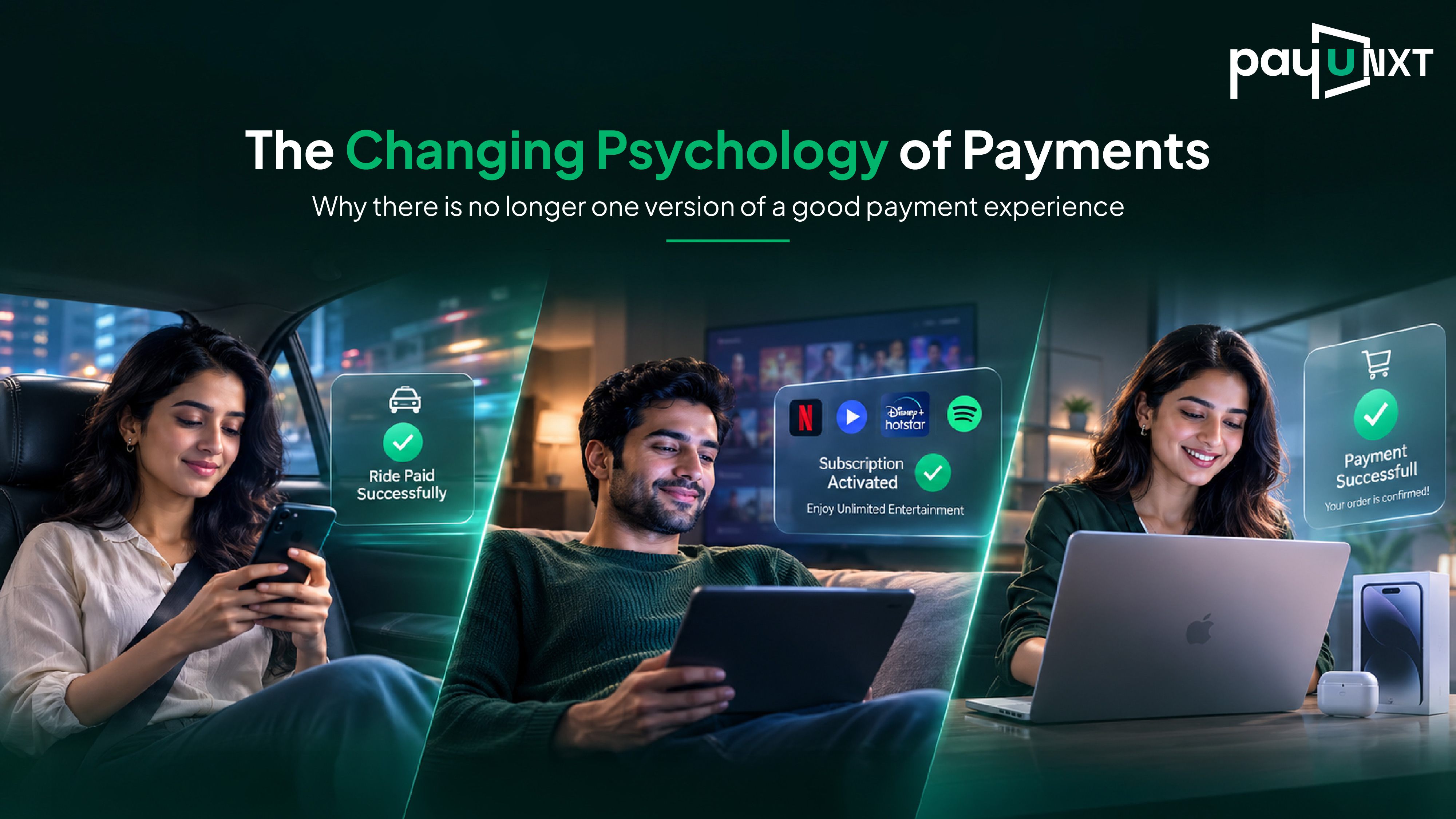
A cab ride? We expect it to happen in seconds.
A subscription? Ideally, we don’t think about the payment at all.
A high-value purchase? We may slow down, compare options and look for reassurance before we pay.
These aren’t contradictory expectations.
They’re the reality of how people pay today.
And that is beginning to change the question the payments industry is trying to answer.
For years, payment innovation was largely about adding capability: another payment method, another authentication mechanism, another way to move money.
But as digital payments have become habitual, the expectation has changed.
India processed more than 23 billion UPI transactions in May 2026 alone. At that kind of scale, the payment is no longer an exceptional event that a customer needs to learn. It is infrastructure embedded in everyday behaviour.
So the next challenge isn’t simply making payments possible.
It is making them appropriate to the moment.
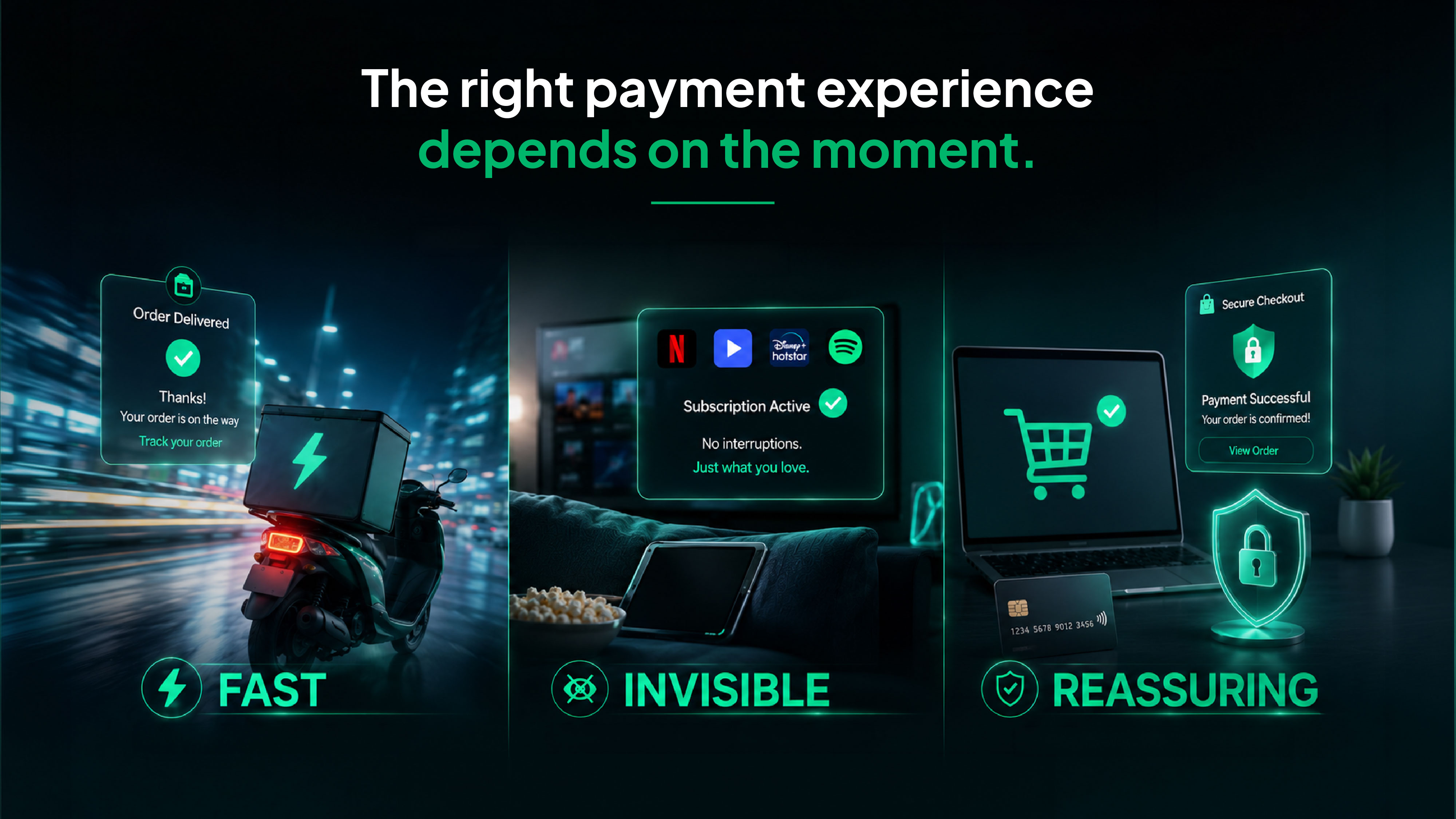
The payment is becoming part of the experience
Think about what happens when you book a cab, order food or renew a subscription.
You don’t experience these as separate steps: buy → leave the experience → pay → return.
The payment is increasingly woven into the journey itself.
That has been made possible by an ecosystem that is far more capable than it was a decade ago: UPI, tokenisation, recurring mandates, saved credentials, device-level authentication and embedded payment experiences have progressively removed the need for customers to manage the mechanics of every transaction.
But there is an interesting paradox here: Payments are becoming more important to the experience while becoming less visible within it.
And once customers become accustomed to that convenience, they start expecting it everywhere.
That is where behaviour starts pushing technology forward.
Consider quick commerce.
The interesting innovation isn’t just that an order can arrive in minutes. The entire customer journey has been redesigned around immediacy.
If the customer has already decided what they want, a slow authentication step can feel less like security and more like an interruption.
This is the problem behind innovations such as PayU FlashPay.
FlashPay brings card authentication into the merchant’s app using device biometrics, reducing dependence on traditional OTP flows. PayU says the approach can reduce authentication latency by up to 80% and improve success rates by up to 5%.
The interesting part isn’t the biometric technology itself.
It is recognizing that authentication should behave differently when customer intent is already high.
Speed isn’t always the objective.
But when it is, every unnecessary second matters.
When familiarity matters, don’t make customers start over
Now take a returning customer.
They know the brand. They have bought before. Their payment details have already been securely tokenised.
Why should their next transaction feel like their first?
This is where tokenisation becomes more than a compliance or security mechanism.
It changes the psychology of repeat payment: the customer doesn’t want a faster version of the same process.
They want to skip the process they have already completed.
PayU Token Hub is built around this behaviour, enabling secure tokenised credentials for repeat payments and one-click experiences. PayU currently cites a 5% higher success rate on repeat card payments using tokenisation.
The shift here is subtle but important.
Convenience isn’t always about reducing time. Sometimes it’s about reducing repetition.
When continuity matters, the best payment is the one you don’t make
Subscriptions take this idea further.
For a customer paying for a service every month, the ideal payment experience isn’t necessarily a better payment page.
It is no payment page at all.
Mandates, recurring payments and tokenised credentials allow payment to become part of the service rather than a recurring interruption to it.
This changes what “successful payment experience” means.
The goal isn’t to get the customer through checkout faster.
The goal is to make sure checkout doesn’t need to happen again.
When context changes, “seamless” has to mean something different
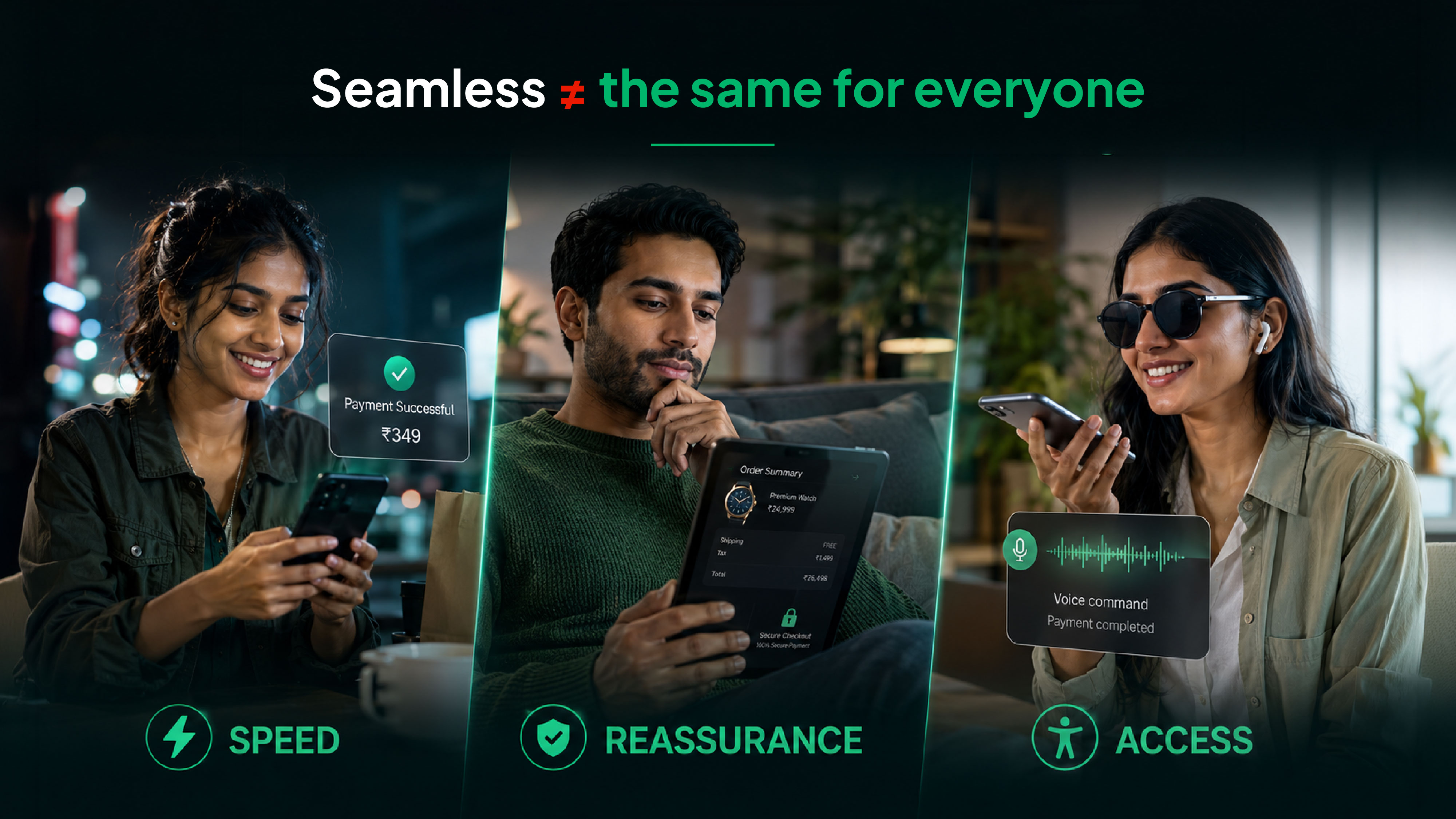
There is another assumption worth challenging.
We often describe the best payment experience as the one with the least friction.
But friction is not the same for everyone.
For a customer using assistive technology, the priority may not be speed. It may be the ability to navigate the checkout independently.
For someone making a high-value purchase, reassurance may matter more than shaving a few seconds off the transaction.
For someone unfamiliar with a merchant, visibility and control may matter more than automation.
That is why accessibility is not simply a feature layered onto checkout. It changes the definition of a good checkout.
PayU’s Accessible Checkout was built around this principle, with screen-reader support and adjustable text and visual settings. It sits within a broader regulatory direction as well: the RBI issued guidelines in 2024 specifically addressing accessibility to digital payment systems for persons with disabilities.
The larger lesson is this: Seamless doesn’t mean the same thing to everyone.
Even old payment methods are being redesigned around behaviour
This shift isn’t limited to new payment technologies.
Take net banking.
The payment method itself hasn’t fundamentally changed. But the journey around it can.
Banking Connect, an NBBL X PayU initiative, is rethinking the traditional net banking experience: instead of leaving merchant checkout and navigating a separate banking interface, customers can complete the payment through a connected bank-app experience, including app-based authentication and biometrics. On desktop, QR can connect the checkout to the customer’s phone.
The payment method hasn’t changed. The journey around it has.
That may be one of the more important directions for payment innovation.
Because it suggests that innovation isn’t always about inventing another way to pay.
Sometimes it is about taking an existing payment method and redesigning how it fits into the customer’s context.
From payment methods to payment moments
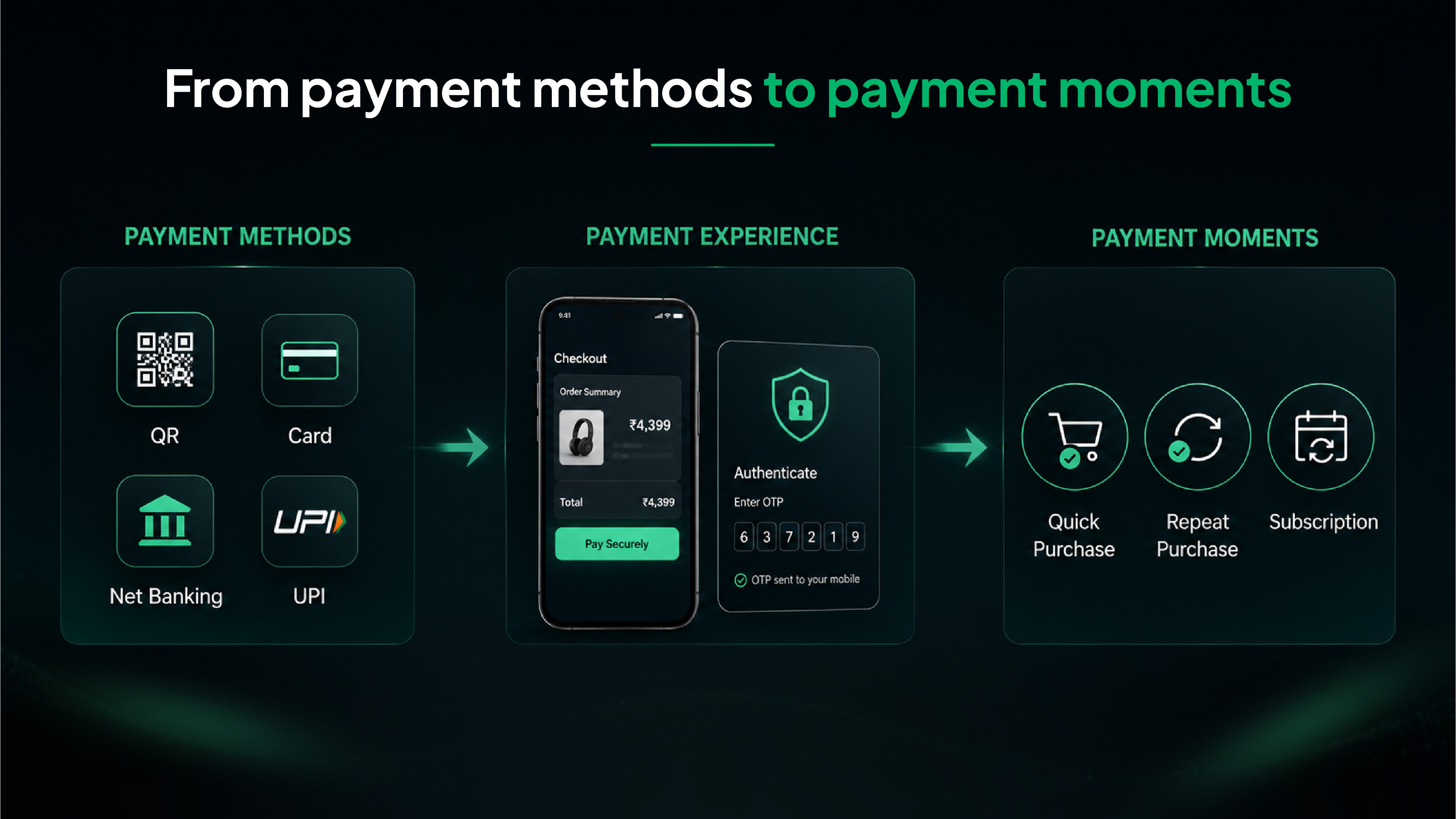
Look at these examples together.
High intent → don’t slow me down.
Returning customer → don’t make me start over.
Ongoing service → don’t make me pay repeatedly.
Different accessibility needs → don’t make assumptions about how I use the experience.
The technologies behind them are different.
The underlying principle is the same:
Payment experiences are becoming more contextual.
This is where the payments ecosystem gets particularly interesting.
India’s digital payment infrastructure has evolved from simply enabling more transactions to enabling more kinds of experiences. UPI alone now operates at a scale where the question is no longer whether digital payment is available, but how it should fit into increasingly different journeys.
That opens up a new layer of product thinking.
Not just: Which payment method should we offer?
But: Which payment experience makes sense here?
The next frontier may be adaptive payments
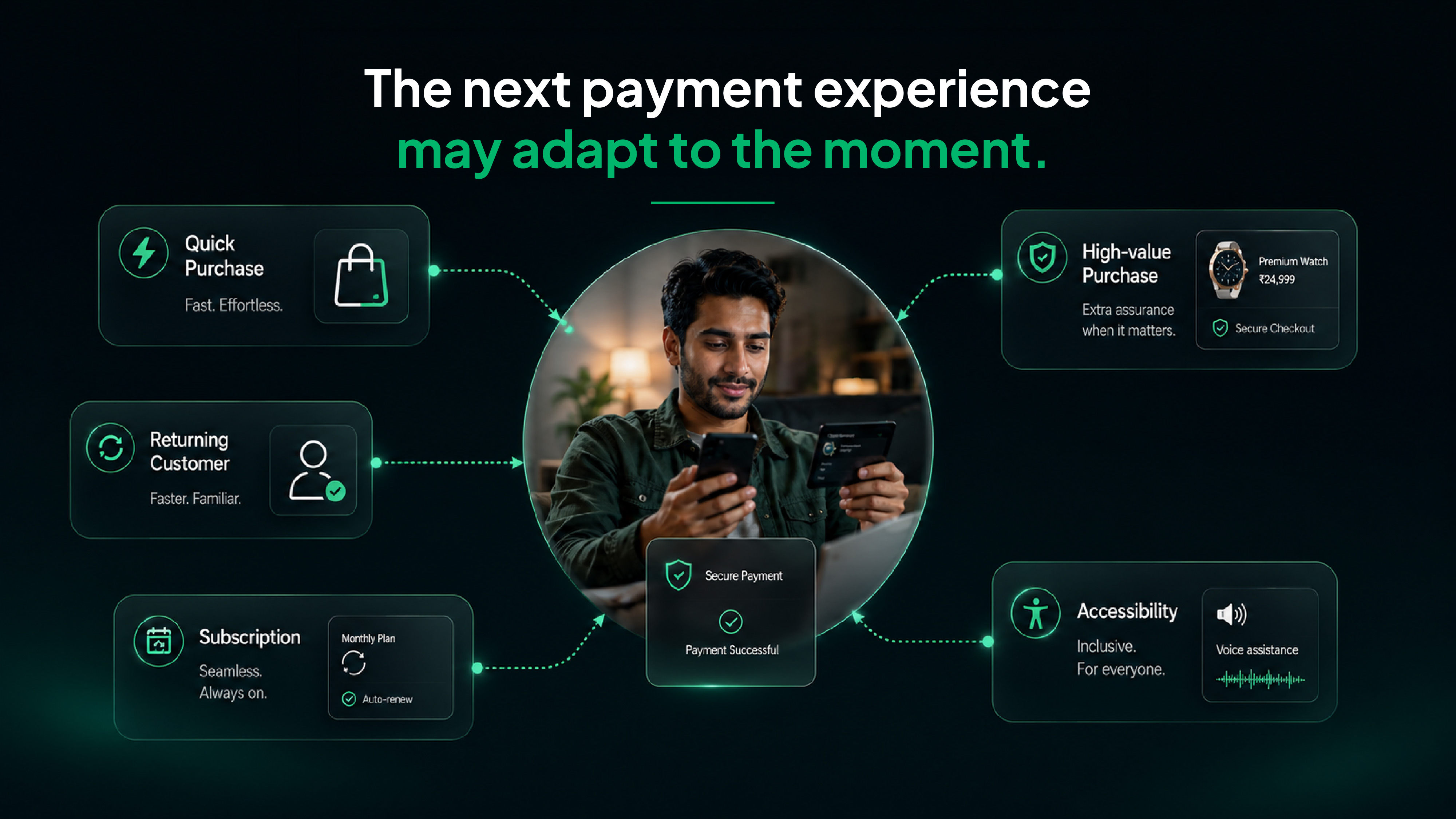
This could be where the next phase of payment innovation comes from.
Not necessarily more payment buttons.
Not necessarily another way to authenticate.
But payment journeys that make better decisions about when and how different capabilities should appear.
Should authentication happen now or later?
Should a returning customer be recognised?
Should the customer see every payment option, or only the ones most relevant to them?
Should affordability information appear before checkout rather than at it?
Should a payment disappear into the background, or become more visible because the customer needs reassurance?
Even the modern checkout is beginning to move in this direction. PayU’s Web Checkout supports 150+ payment methods, while its checkout capabilities allow merchants to configure and prioritise payment methods based on the experience they want to create.
The implication for payment companies is significant.
The future of payments may be less about giving customers more choices, and more about making better choices on their behalf, without taking control away from them.
What comes next for payments?
If payments are becoming more contextual, the next question for the industry is not simply “How do we make payments faster?”
It is: “How should a payment behave in this particular moment?”
For payment companies, this means that the boundaries between payments, checkout, authentication and the broader customer experience will continue to blur.
The infrastructure underneath will become more sophisticated. But the experience on top of it will need to feel simpler, more intuitive and more relevant to the person using it.
That is the direction payment innovation is moving towards: not more technology in the journey, but technology that responds better to the journey.
At PayU, this is shaping how we think about what we build next, from making high-intent transactions faster to making repeat payments more seamless, and from rethinking established payment journeys to building experiences that work for more people.