
AI-Powered Summary
- Biometric authentication is replacing OTPs in online payments to provide a faster, more seamless checkout experience.
- OTPs face challenges such as delays, connectivity issues, and user errors, leading to higher cart abandonment rates.
- Biometric methods like fingerprint and facial recognition offer secure, intuitive, and nearly invisible authentication for customers.
- PayU's FlashPay integrates biometric authentication with EMV 3DS standards, improving payment success rates and reducing checkout friction.
- Biometric authentication is particularly impactful in high-intent purchase scenarios like flash sales, travel bookings, and quick commerce.
- This shift in payment authentication enhances customer satisfaction, retention, and overall conversion rates for merchants.
Every online shopper has experienced this.
You find exactly what you’re looking for. Add it to your cart. Enter your card details. Wait for the OTP. Switch to your messaging app. Copy the code. Return to the checkout. And then…
The session expires. OTP arrives late. Or the payment simply fails.
The purchase that took minutes to decide is lost in the final few seconds.
For years, One-Time Passwords (OTPs) have been the cornerstone of online payment authentication in India. They brought an additional layer of security and helped build trust in digital transactions. But as commerce has evolved, so have customer expectations.
Today, consumers expect payments to be as effortless as unlocking their phones. They don’t think about authentication—they simply expect it to work.
This shift is prompting the payments industry to rethink one important question:
Can online payments become more secure while requiring less effort from customers?
The answer lies in biometric authentication.
Why OTP-Based Authentication Is Beginning to Show Its Limits
OTPs have served the industry well, but they were designed for a different era of digital commerce.
Today’s shoppers move quickly between apps, devices, and payment methods. Every additional step during checkout increases the possibility of interruption.
Common challenges with OTP-based authentication include:
- Delayed SMS delivery due to network conditions
- Switching between applications to retrieve the OTP
- Poor connectivity while travelling or roaming
- Mistyped or expired OTPs
- Longer authentication times that lead to customer drop-offs
For merchants, these aren’t just usability issues—they directly impact conversion rates. Even customers who have already decided to purchase can abandon a transaction if the checkout experience becomes unnecessarily complicated.
As online commerce continues to grow, reducing friction at the final step of payment has become just as important as attracting customers to the checkout in the first place.
The Evolution of Payment Authentication
The payments ecosystem has consistently evolved to improve both security and convenience.
Static passwords gave way to OTPs.
Physical cards evolved into tokenized digital credentials.
Now, authentication is moving toward something customers already use every day: the fingerprint or facial recognition built into their smartphones.
Consumers have grown comfortable using biometrics to unlock devices, access banking applications, and authorize digital wallets. Extending the same familiar experience to online card payments is a natural progression.
Rather than asking customers to remember or retrieve something, biometric authentication verifies who they are using the secure capabilities already available on their device.
The result is an authentication experience that feels almost invisible.
How Does Biometric Authentication Work for Online Card Payments?
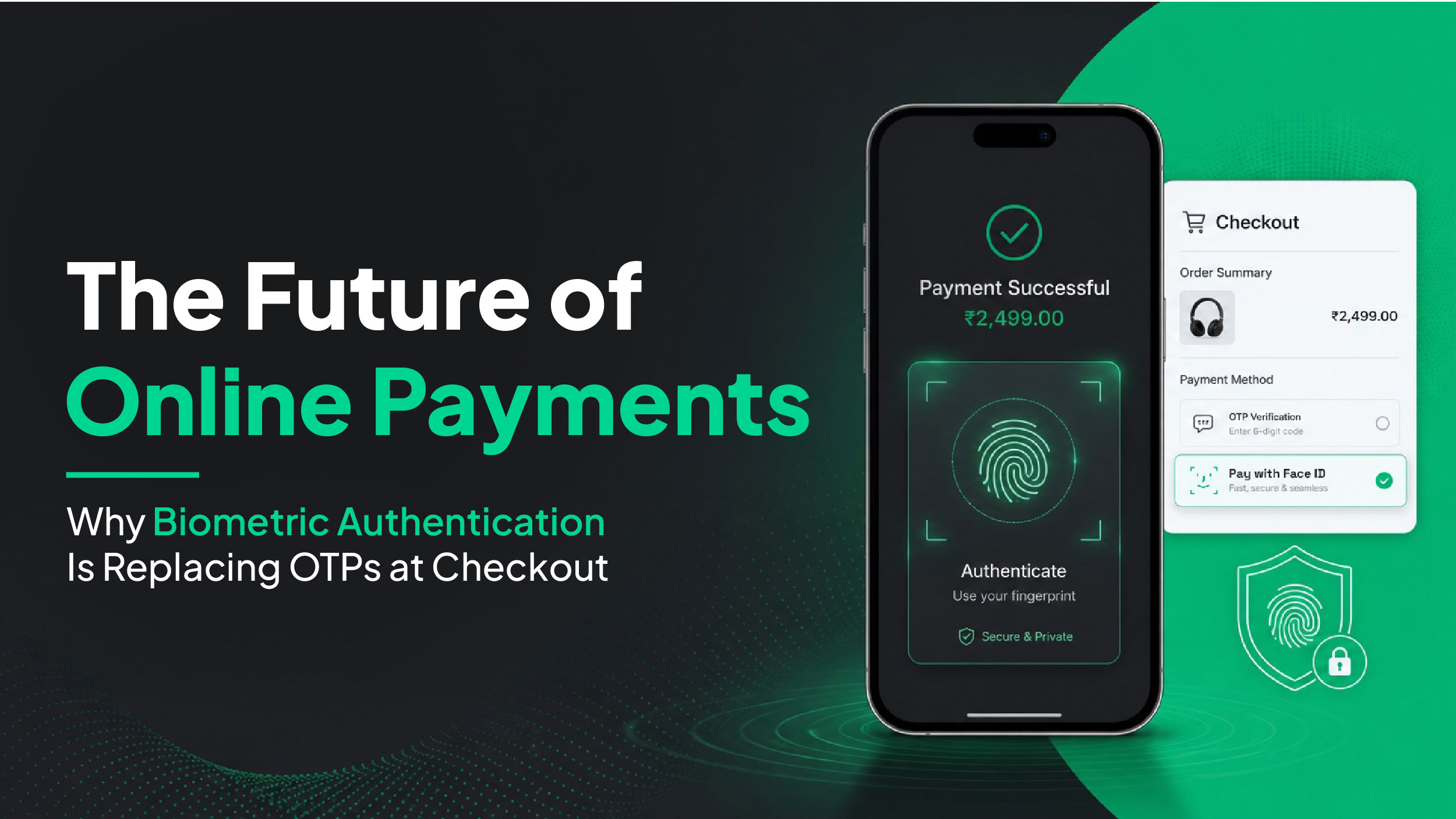
Biometric authentication enables customers to authorize an online card payment using their device’s fingerprint or facial recognition instead of manually entering an OTP.
When a customer proceeds to pay, they authenticate themselves using the biometric method already configured on their device. Behind the scenes, the authentication is completed using secure industry standards without exposing or storing the customer’s biometric information with the merchant.
The experience is faster, more intuitive, and designed to maintain the same high standards of payment security while significantly reducing friction during checkout.
Why It Matters for Merchants
For merchants, authentication isn’t simply a security checkpoint; it is a critical business moment.
A smoother authentication experience can influence:
- Payment completion rates
- Customer satisfaction
- Repeat purchases
- Cart abandonment
- Overall checkout conversion
When customers encounter fewer interruptions, they are more likely to complete their purchases.
This is particularly valuable for businesses where speed directly influences buying decisions, such as e-commerce, quick commerce, ticketing, travel, food delivery, subscriptions, and digital services.
As competition increasingly shifts from acquiring customers to retaining them, optimizing the payment experience has become a strategic advantage rather than just a technical enhancement.
Introducing FlashPay: Bringing Biometric Authentication to Online Card Payments
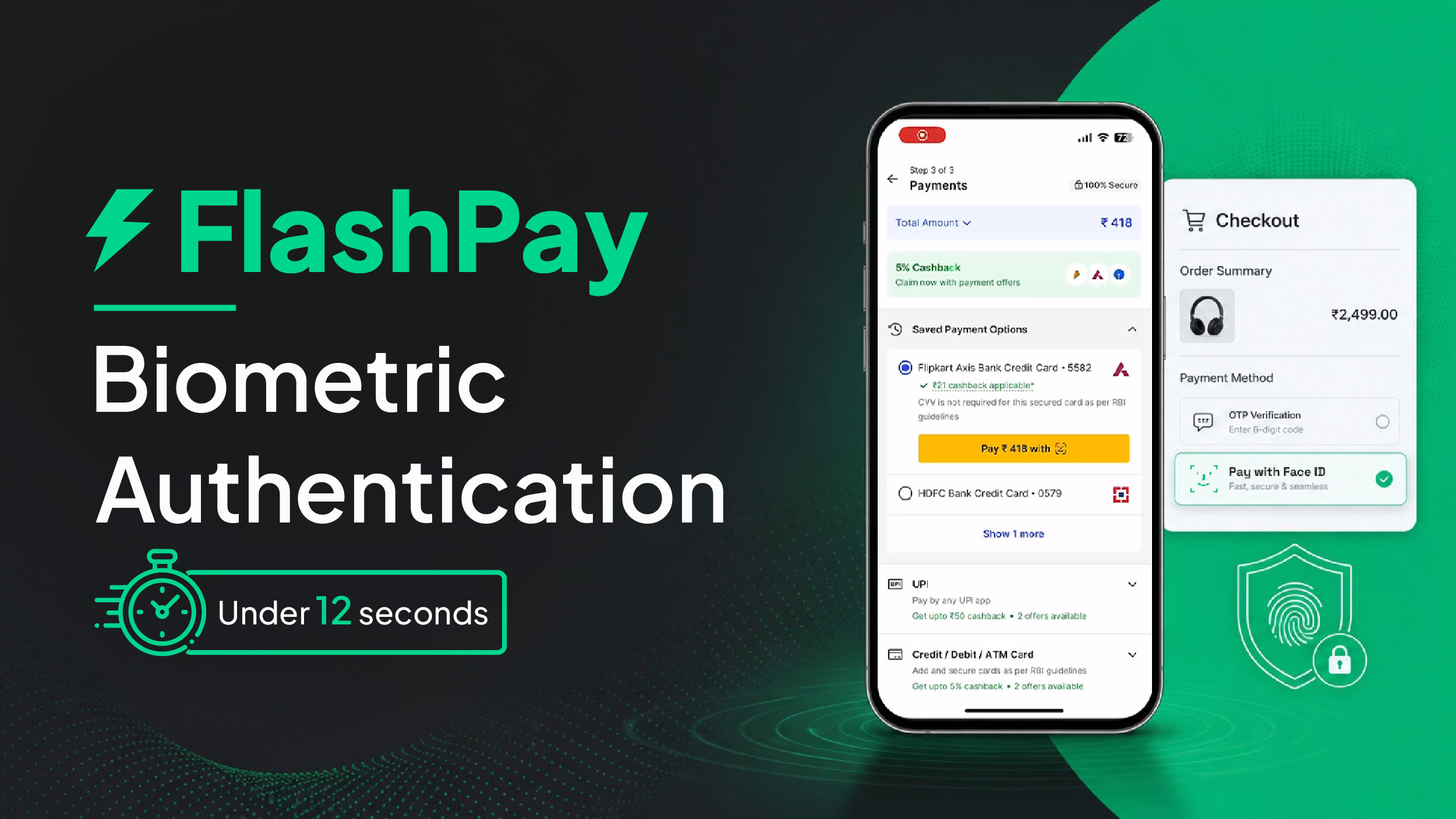
To help merchants deliver a faster and more seamless checkout experience, PayU has introduced FlashPay—a biometric authentication solution designed for online card payments.
Instead of requiring customers to wait for and enter an OTP, FlashPay enables eligible users to authenticate transactions using their device’s built-in biometric capabilities, such as fingerprint or Face ID.
Built on EMV® 3-D Secure standards, FlashPay integrates with existing authentication infrastructure while helping merchants modernize the customer experience.
Key capabilities include:
- Biometric authentication in under 12 seconds
- Up to 5% higher payment success rates
- Reduced checkout friction without compromising security
- Support for tokenized cards
- Guest checkout compatibility
- Seamless integration with existing EMV 3DS authentication flows
Rather than changing how merchants process payments, FlashPay improves one of the most important moments in the customer journey—the final authentication step.
Where Biometric Authentication Creates the Biggest Impact
Biometric authentication is particularly valuable in high-intent purchase journeys where every second matters.
Examples include:
- Flash sales and limited-time offers
- Quick commerce orders
- Travel and ticket bookings
- Food delivery
- Subscription renewals
- Digital entertainment purchases
- Bill payments
- High-frequency retail transactions
In these scenarios, even a small reduction in checkout friction can translate into measurable improvements in completed transactions and customer experience.
Frequently Asked Questions
Is biometric authentication more secure than OTP?
Biometric authentication leverages the secure capabilities built into modern smartphones and follows established payment authentication standards. It reduces reliance on SMS-based authentication while maintaining strong security controls.
Does FlashPay replace EMV 3DS?
No. FlashPay works within existing EMV 3DS authentication frameworks, modernizing the customer experience while maintaining compliance with established payment security standards.
Do merchants need customers’ biometric data?
No. Merchants do not receive or store customers’ fingerprint or facial recognition data. Authentication is performed securely on the customer’s device.
Which businesses benefit the most from FlashPay?
Any business that values faster checkout and higher payment completion rates can benefit, especially e-commerce, quick commerce, travel, ticketing, digital subscriptions, food delivery, and other high-frequency online payment use cases.
Looking Ahead
The history of digital payments has often been defined by a trade-off between security and convenience.
For years, stronger security meant asking customers to complete more steps.
Biometric authentication challenges that assumption.
By allowing customers to authenticate payments using something they already trust and use every day, the industry is moving toward a future where security becomes more intuitive rather than more intrusive.
The most successful checkout experiences of the future won’t be remembered because customers noticed the authentication process.
They’ll be remembered because customers barely noticed it at all.